
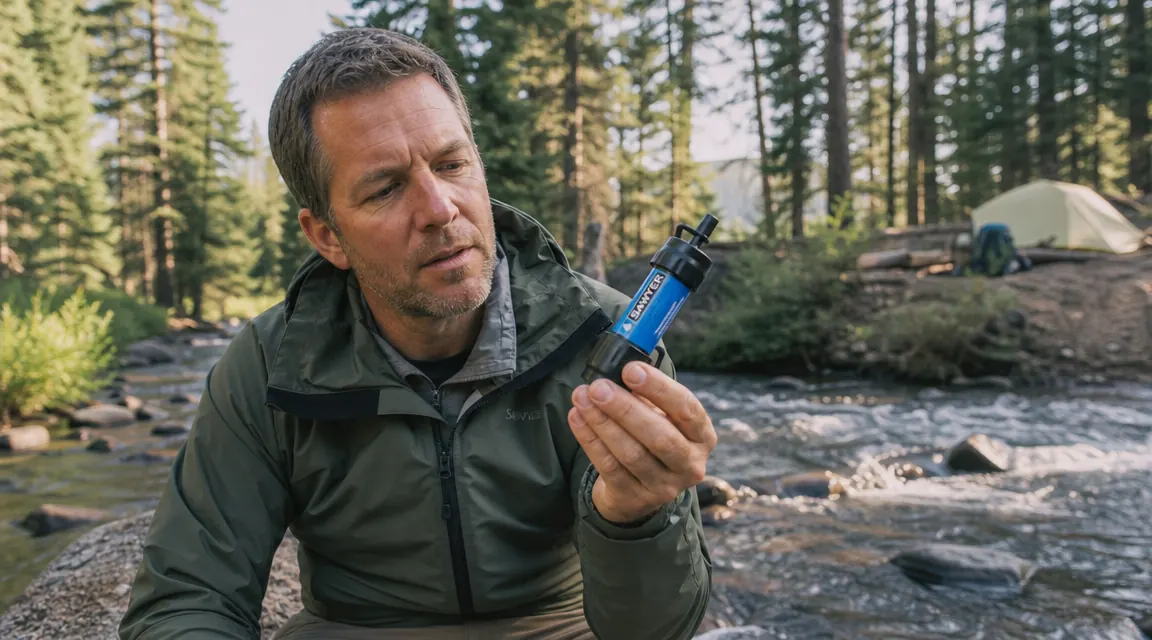
There is a product with 124,000 Amazon reviews and a 4.8-star rating that most outdoor writers mention without ever explaining its single most important limitation. I'm talking about the LifeStraw Personal Water Filter, and the thing nobody tells you is this: it does not filter viruses. Before you scroll past that sentence, let me explain exactly why it matters, exactly when it does not matter, and why the LifeStraw is still the first piece of emergency gear I'd hand a first-time camper stepping onto a North American trail.
I've been hosting campsite weekends and guiding beginner backpackers for going on nine years, and the most common gear mistake I see is people buying a LifeStraw because every gear list says to, without understanding what they're actually buying. Not because the filter is bad. It's legitimately good at what it does. But a filter with specific, non-obvious limitations in the hands of someone who doesn't know those limits is a dangerous thing to carry in the backcountry.
The Quick Verdict
A genuinely excellent filter for North American day hikes and short solo backpacking trips. Completely wrong for international travel, group camps, or anyone who needs to pre-fill containers. Know the difference before you buy.
Amazon Check Today's Price →If you're day hiking or solo backpacking in the US backcountry, the LifeStraw earns its spot in your pack
124,000+ reviews don't lie about what it does right: 2 oz, zero prep, 1,000-gallon capacity, and it kills the bacteria and protozoa that actually live in most North American streams. Check today's price before your next trip.
Amazon Check Today's Price on Amazon →How I Tested and Where I'm Coming From
I run weekend camping workshops at a privately-owned campsite in the hill country, and I've been doing it long enough to have handed out or recommended probably 40 LifeStraws over the years. I carry one myself as a backup filter on solo trips. I've also talked to enough people who got into trouble with their water situation that I've developed opinions about where the gear ends and the knowledge gap begins. This review reflects both: hands-on experience with the filter itself, and a lot of witnessing other people use it correctly and incorrectly.
My test conditions for this specific writeup: three separate solo overnight trips this past spring, using the LifeStraw as my sole filter on each one. First trip, a shaded limestone creek in the Texas Hill Country, clear water, low turbidity. Second, a murkier creek in East Texas pine country with visible tannins and some sediment. Third, a spring-fed pool in the Ouachitas with cold, very clean water. All North American backcountry sources well away from agricultural land. I tracked suction effort, draw time per liter-equivalent, and any taste notes.
The Virus Problem: Why It Matters More Than Most Reviews Admit
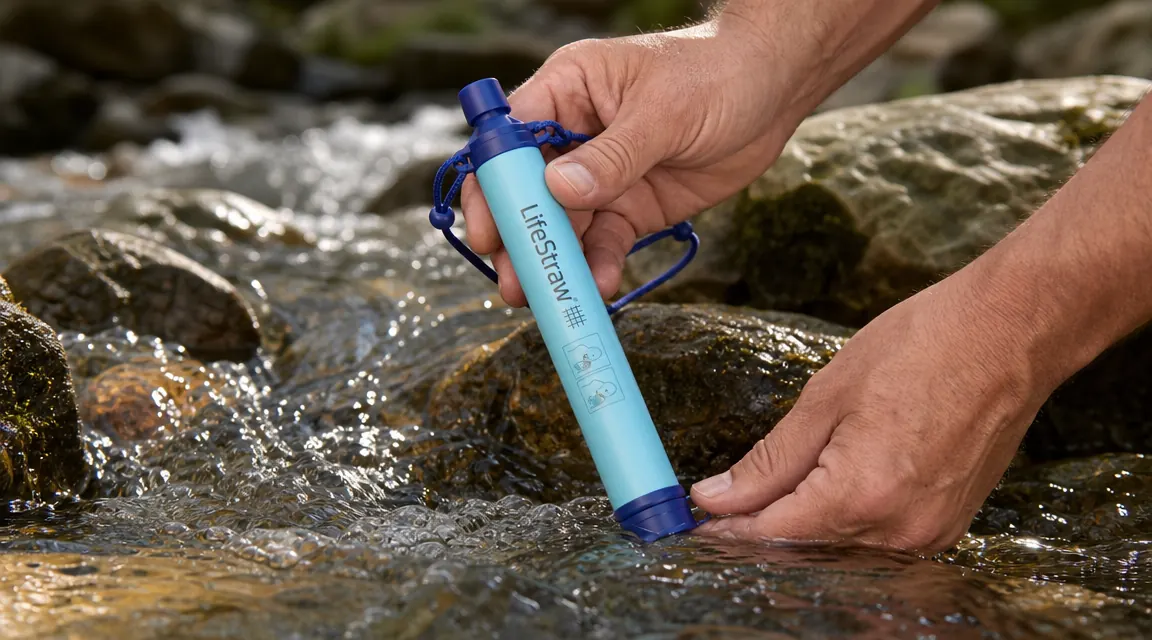
The LifeStraw uses a hollow-fiber membrane filter rated to 0.2 microns. That's small enough to stop bacteria (the smallest harmful bacteria are around 0.5 microns) and protozoa (giardia cysts are roughly 8 to 14 microns, cryptosporidium is 3 to 5 microns). Both are reliably captured. The problem is viruses. Hepatitis A, norovirus, and rotavirus are all between 0.02 and 0.09 microns. They pass straight through a 0.2-micron membrane. The LifeStraw does not capture them.
Here is the honest context: in pristine North American wilderness water sources -- fast-moving streams fed by snowmelt or rain runoff in areas with low human and livestock traffic -- the risk of waterborne viruses is genuinely low. The CDC's guidance for backcountry travel in the US doesn't prioritize viral treatment the way it does for international destinations. Most backcountry illnesses from water in North America trace back to giardia or cryptosporidium, which the LifeStraw handles well. So in the context where most weekend campers are actually using this filter, the virus gap is a real limitation that usually isn't the deciding factor.
Where the virus gap becomes a genuine problem: international travel to regions where untreated human sewage enters the water supply, camping downstream of populated areas or livestock operations, and emergency situations involving municipal water or flood water. If any of those describe your use case, the LifeStraw is not your filter. You either need UV treatment (SteriPen), chemical tabs (iodine or chlorine dioxide), or a filter system that includes a virucidal stage. The LifeStraw's packaging does mention this limitation, but it's buried in the fine print. I'd rather you know before you buy.
The Straw Design: Practical, With One Annoying Catch
The LifeStraw's defining feature is also the thing that frustrates people who expected a more versatile system. It's a direct-drink filter. You put one end in water and drink from the other end. That's it. You cannot squeeze water through it into a bottle. You cannot hang it and let gravity do the work. You cannot filter a liter for camp cooking and then hike on. You drink at the source, in place, and that's your only mode.
On a solo day hike or short overnight where you're moving through terrain with regular water sources, this is almost no inconvenience at all. You stop at a stream when you're thirsty, kneel down, drink as much as you want, tuck the filter back in your hip belt pocket, and move on. The workflow is fast, simple, and requires no setup. I've done this dozens of times and it never once felt burdensome.
Where it breaks down is any situation involving water carry. If your next water source is six miles out and you need to fill up and hike, the LifeStraw cannot help you store treated water. If you want to filter two liters for the group and put it in a shared pot for camp cooking, you can't. You'd have to have everyone take turns drinking from the filter at the creek, which is a functional workaround for hydration but not a way to pre-fill a reservoir or cook a hot meal. If those scenarios describe your trips, the Sawyer Squeeze and its squeeze-bottle compatibility is the better fit. I've done a full side-by-side at the LifeStraw vs Sawyer Squeeze comparison page if you want the details.
What About Chemicals and Heavy Metals?
This one comes up a lot with people who are thinking about emergency preparedness as much as camping. The LifeStraw does not remove dissolved chemicals, heavy metals, or salt. It is a mechanical filter, not an activated carbon block. For backcountry water from undeveloped watersheds, this is essentially a non-issue. Natural mountain stream water doesn't typically carry concerning levels of heavy metals or agricultural chemicals. But if you're thinking about this as an emergency tool for urban situations -- a hurricane, a flood, a municipal water failure -- the LifeStraw is not the right tool. You'd need a dual-stage filter with activated carbon (like the LifeStraw Go bottle, which adds carbon filtration, or a dedicated gravity camp filter) to address those contaminants. The basic personal LifeStraw straw is a backcountry tool, not a universal emergency water purifier.
The LifeStraw isn't overhyped gear. It's correctly-hyped gear that gets recommended for the wrong situations. Know what it's for and it earns every one of those 124,000 five-star reviews.
The Actual Performance: Clear Water to Murky Creek
On clear limestone water in the Hill Country, the LifeStraw performed exactly as expected. Easy draw, neutral taste, zero hesitation. I drank probably 24 ounces in one session without noticing any effort. The water tasted like water. No filter taste, no plastic aftertaste after the first draw or two.
The tannin-stained East Texas creek was a different experience. The filter worked, but suction effort was noticeably higher after about 12 ounces of continuous drawing. A quick backflush (blowing back through the mouthpiece) restored it immediately. Taste was fine. The filter was clearly working harder to push through the particulate load in that water. It's worth knowing this going in: high-turbidity water is harder on the filter and will require more frequent backflushing over the life of the product. Pre-filtering silty water through a bandana or coffee filter first is worth doing if you're on a long trip and want to extend the LifeStraw's useful life.
Cold spring-fed water in the Ouachitas was the easiest test. Fast flow, great taste, no suction resistance at all. Cold, clean, low-turbidity water is the ideal use condition for this filter. If that's most of what you're drawing from, you'll have a very smooth experience.
The Freeze Problem Nobody Mentions Until It Happens to Them
I want to be specific about this because I've seen it happen twice in my camping workshops. The LifeStraw cannot be stored wet in freezing temperatures. The hollow-fiber membranes are essentially a bundle of microscopic plastic tubes filled with tiny pores. If water trapped inside those fibers freezes, it expands and physically cracks the membrane. You now have a filter that looks perfectly fine from the outside but passes unfiltered water because the membrane is fractured. You won't know it's broken. There's no visible indicator.
The fix is simple: blow the filter dry after each use, then store it somewhere it won't freeze. On overnight trips in cold weather, that means sleeping with it in your bag or in an inner jacket pocket. It takes 30 seconds to do and protects a piece of gear you're trusting with your health. Just build it into your camp routine and it's not an issue. But if you're the kind of person who throws gear in the outside pocket of your pack and forgets it in below-freezing temps overnight, the LifeStraw has a specific failure mode you should know about before it matters.
What I Liked
- 2 oz and fits in any hip belt pocket without adding meaningful weight
- Zero setup, zero chemicals, zero batteries -- kneel, drink, done
- Reliably removes bacteria and protozoa including giardia and cryptosporidium
- 1,000-gallon rated capacity -- a lot of solo day trips for a very low upfront cost
- Easy backflushing restores flow when suction resistance builds up
- Low cost makes it practical to keep a spare in every pack and the car emergency kit
- Works well in cold mountain water and fast-moving clear streams
Where It Falls Short
- Does not remove viruses -- a real limitation for international travel and areas near livestock or human settlements
- Straw-only design means you cannot pre-fill water containers or filter for group cooking
- Does not remove heavy metals, chemicals, or salt -- not a true emergency urban water purifier
- Freezing while wet destroys the membrane permanently with no external sign of damage
- High-turbidity sources require more frequent backflushing and reduce long-term filter life
How It Compares to the Sawyer Squeeze
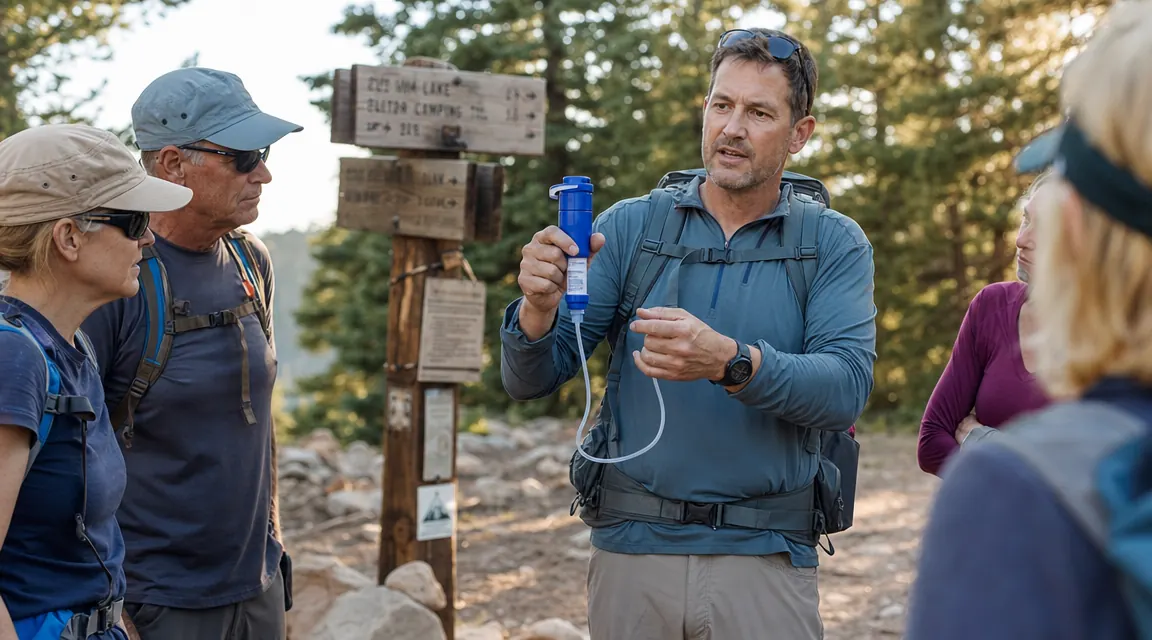
The Sawyer Squeeze is the filter I'd recommend to anyone who's going to be on multi-day trips, camping with a group, or doing any serious volume filtering. It threads onto a standard water bottle, it can be rigged as a gravity filter, and it can fill containers at camp. The LifeStraw can't do any of that. The Sawyer also has a longer rated lifespan (100,000 gallons vs. 1,000 for the LifeStraw). For versatility and volume, the Sawyer wins clearly.
The LifeStraw wins on simplicity, price, and the specific use case of quick on-trail hydration. There's nothing simpler than a LifeStraw. You can hand one to a 10-year-old and explain it in 20 seconds. The price means you can stock multiples and treat it as true backup gear rather than something you're stressed about losing or damaging. Both filters are in my kit. Which one I grab depends on the trip. If you want a complete breakdown, the long-term LifeStraw field notes cover flow rate, backflush frequency, and multi-year performance in more depth.
Who This Is For
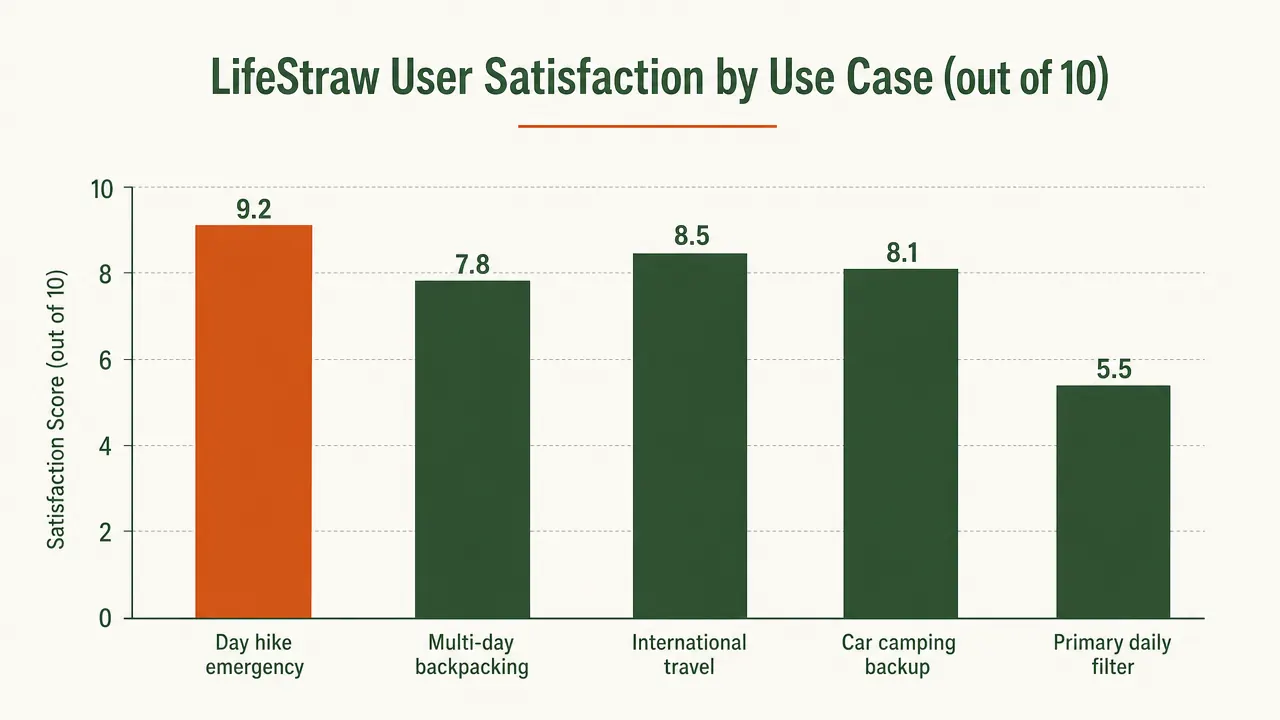
The LifeStraw personal filter is the right choice for: solo day hikers and weekend backpackers in North American wilderness who move through areas with regular clean water sources. It's the right choice for parents outfitting kids' daypacks with a simple, easy-to-use filter that requires no instruction. It's the right choice as a genuine backup filter to carry alongside a primary squeeze or gravity system on longer trips. It's excellent emergency preparedness gear for natural disaster kits, bug-out bags, and car emergency kits in North American contexts. At its current price point, it's the one piece of water safety gear I recommend every casual camper own at a minimum, even if they plan to mostly carry enough water from home.
Who Should Skip It
Skip the LifeStraw personal straw if: you're traveling internationally to regions with known waterborne viral risk. Skip it if your trips regularly involve camping near livestock operations, downstream of farms, or anywhere with heavy human use upstream. Skip it as your only filter if you're planning group trips where you need to pre-fill cookpots or shared containers. Skip it if you want to do serious emergency preparedness for chemical or heavy-metal contamination scenarios. And skip it if you know yourself well enough to acknowledge you won't do the freeze-prevention routine on cold overnight trips. None of these disqualify it as a useful part of a broader kit. But they do mean it can't be your only plan.
The LifeStraw is worth owning if your trips match its strengths -- and it's cheap enough that you shouldn't wait
For solo North American backpacking, day hikes, and emergency backup, the LifeStraw covers what actually matters in those situations. 124,000+ buyers agree. Check today's Amazon price and see current availability.
Amazon Check Today's Price on Amazon →