
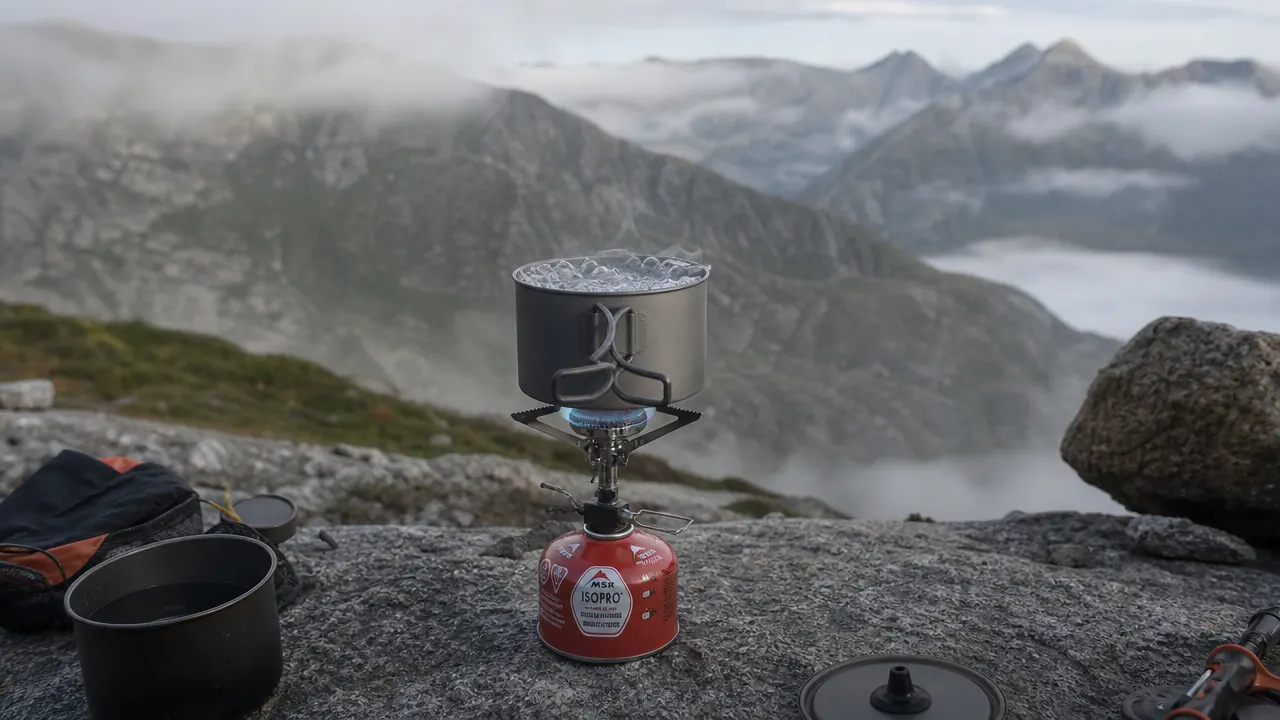
My buddy Dan handed me a MSR PocketRocket 2 before a Pemigewasset Loop trip in July 2021 and said, 'Stop buying stoves and just use this one.' I had gone through four different canister stoves in two years, chasing cheaper options and replacing them when they let me down. That PocketRocket weighed 2.6 ounces, folded into a small plastic case about the size of a chapstick tube, and boiled my first pot of water in 3.5 minutes on a dead-calm morning. Three years and somewhere north of 40 overnight trips later, that same stove is sitting in my kit bag right now.
This is not a review of a stove I used for a weekend. I have cooked oatmeal on it at 10,200 feet in the Wind Rivers, boiled water for hot chocolate during a sleet storm in the Smokies, and simmered a rehydrated curry on it in the Sierras. I know this stove the way you know a pocket knife you carry every day. Here is everything I have found.
The Quick Verdict
The best all-around canister stove for three-season backpacking. It is fast, reliable, compact, and built to outlast you. Wind performance is the one genuine weak spot, and it is worth knowing before you buy.
Amazon Check Today's Price →Still burning strong after three years. Check whether the price has moved since I last looked.
The MSR PocketRocket 2 runs on any standard isobutane-propane canister and folds down to almost nothing. It has been the top-rated ultralight canister stove on Amazon for good reason.
Amazon Check Today's Price on Amazon →How I Have Used It Over Three Years
My typical use is solo or two-person trips of two to five nights. I cook one hot meal per day, usually dinner, and boil water for coffee and oatmeal in the morning. On a four-night trip I burn through roughly one small (100g) canister if I am careful, sometimes a medium (230g) if I am doing more involved cooking. My pack weight hovers around 18 pounds base, and the PocketRocket 2 plus a 100g canister adds about 6 ounces total. That matters when you are covering big miles.
I have also used it at established campsites with car camping friends. It performs identically in that context, just with more eyes watching. My friend Karen, who had never used a canister stove, lit it on her second try without any help. The valve is intuitive and the piezo igniter, while not bombproof, works most of the time when the canister is warm and full.
The stove has never failed to light. I have had the igniter stop clicking in cold weather, around 28 degrees Fahrenheit on a November trip in the White Mountains, but a lighter solved that in three seconds. That is not a flaw, that is physics.
Boil Time and Flame Control: The Real Numbers
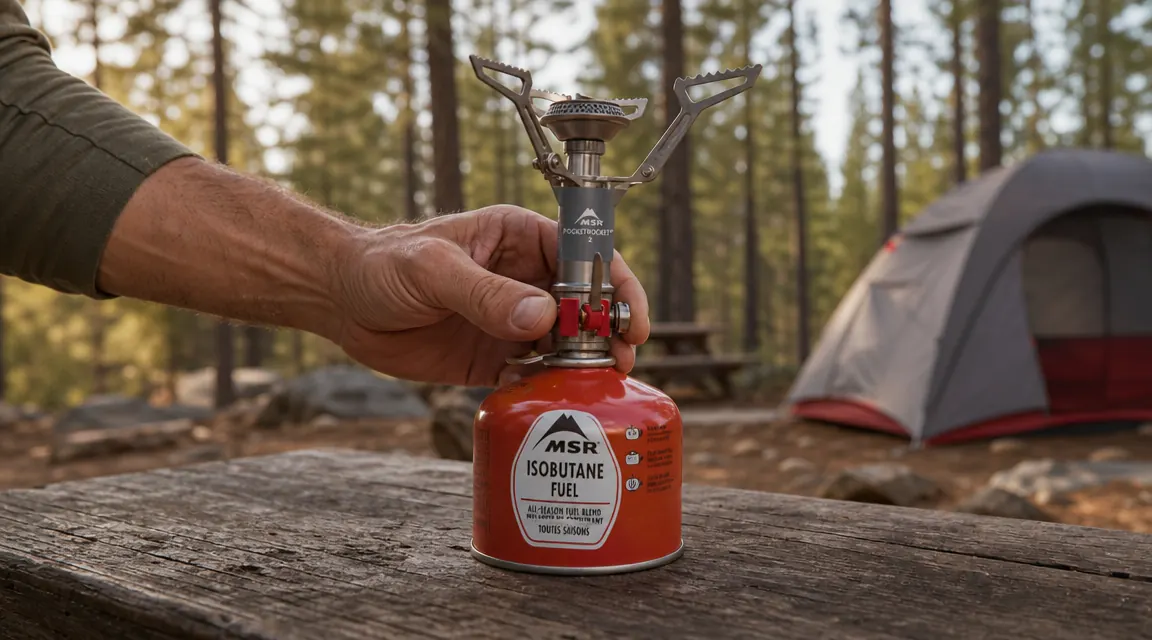
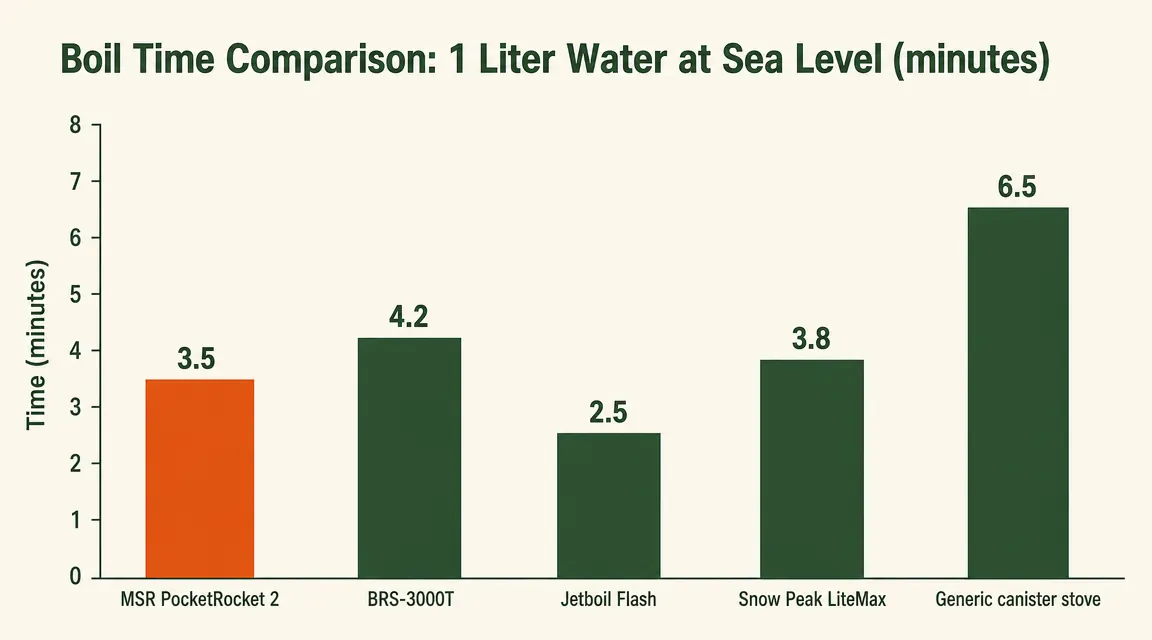
MSR claims 3.5 minutes to boil a liter of water. On still mornings with a fresh canister and my 750ml titanium pot, I consistently hit that in 3 to 3.5 minutes. That tracks. In light wind, meaning a sustained 5 to 8 mph breeze, my times drift up to 5 to 5.5 minutes. In real wind, a gusty ridgeline or an exposed site where you are watching your pot rock, you can be looking at 7 to 9 minutes with the standard setup. This is the single biggest practical limitation of the stove, and I will come back to it.
Flame control is genuinely good, better than most canister stoves at this price. The valve gives you a smooth transition from a roaring boil down to a low simmer. I have made rice, rehydrated beans, and even done a slow-cook on a pasta dish without burning the bottom. Not every canister stove in this price range gives you that kind of modulation. The BRS-3000T, which I have tried, has a flimsy valve that skips from off to full-blast with very little middle ground.
One thing I noticed after about 18 months: the flame gets slightly less predictable when a canister is down to its last 20 percent. You get occasional flutters and the heat output drops. This is universal to all canister stoves at low pressure and not a MSR problem, but worth knowing if you like to run canisters to empty.
Wind Performance: Where the PocketRocket 2 Shows Its Limits
I want to be straight with you here because this is where most long-term reviews of this stove get soft. The PocketRocket 2 is not a great wind stove. The burner head sits low on the canister, your pot sits close to the burner, and there is no integrated windscreen. MSR specifically tells you not to use a foil windscreen around the canister because of explosion risk from heat buildup. That is real and you should take it seriously.
What you can do: position the stove behind a rock, your body, your pack, or a natural windbreak. On 80 percent of my trips that is completely adequate. On an exposed alpine site where the wind does not quit, you will lose time and fuel, and there is not much you can do about it. If your trips routinely take you above treeline in windy conditions, look at the MSR WindBurner system, which is designed specifically for that environment. The PocketRocket 2 is a three-season, below-treeline stove at heart.
I have cooked in sleet, at altitude, and in 30-degree cold. The only time the PocketRocket 2 has ever slowed me down is a sustained ridgeline wind. That is one trip out of forty.
Build Quality and Durability After Three Years
The legs and pot supports are stainless steel. The valve body is a blend of aluminum and brass. Three years of use, 40-plus trips, shoved into the bottom of a pack, bounced around in a car, and I have zero issues. One of the pot supports has a very slight outward bend from being packed against a heavy item once. It still functions perfectly. The flame spreader at the top of the burner looks identical to how it did in 2021.
The storage case is a simple plastic clam-shell. It has held up without cracking. It is not waterproof, which does not matter because the stove itself does not mind moisture, but keep that in mind if you store small items inside the case.
The piezo igniter is the part most likely to eventually fail. I have heard of them wearing out after several years of heavy use. Mine still clicks, though it has become slightly less reliable in cold weather than it was when new. Carry a lighter regardless. This is true of every stove with an igniter.
Fuel Efficiency and Canister Compatibility
The PocketRocket 2 threads onto any Lindal valve canister, which includes MSR IsoPro, Jetboil Jetpower, Snow Peak, and most store-brand isobutane-propane mixes you find at REI, Bass Pro, or backcountry outfitters. I have used it with half a dozen different canister brands over three years with no issues. Do not try to use it with the older threaded butane canisters common in European camping stores. Those use a different thread and it will not seat.
Fuel efficiency: I average about 22 liters of boiled water per 100g canister when cooking in typical conditions. On a solo two-night trip I routinely finish with fuel to spare on a 100g canister. On a four-night trip with two people, I bring a 230g canister and usually return with around 40 percent left. These are real numbers from actual trips, not lab conditions.
What I Compared It To Before Settling
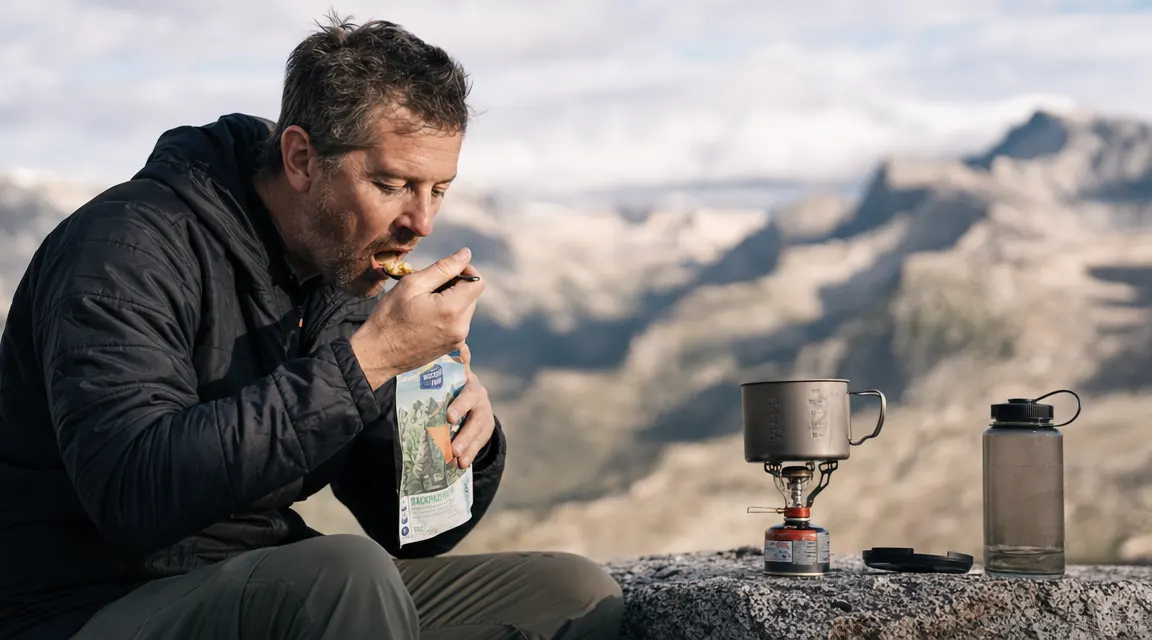
Before the PocketRocket 2 I owned a SOTO Windmaster, a Olicamp Kinetic Ultra, and two no-name budget stoves. The budget stoves both developed valve problems within six months. The SOTO Windmaster is a legitimately good stove with better wind performance, but it requires SOTO's proprietary four-flex pot supports to stabilize a larger pot. The PocketRocket 2 has wider pot supports out of the box. For a wider range of pot sizes, it is the more versatile choice.
I have also spent time with the BRS-3000T, which costs in the budget range and weighs 25 grams. The BRS is lighter and cheaper. It is also noticeably flimsier, the flame control is binary, the pot supports are narrow and wobbly under a 1.5 liter pot, and build quality is a step down. For ultralight gram-counting on perfect-weather trips, the BRS is a viable choice. For everything else, the PocketRocket 2 justifies its price by being predictable and reliable over many years, not just many trips. I wrote more on the comparison between these two in my MSR PocketRocket 2 vs BRS-3000T breakdown.
What I Liked
- Genuine 3.5-minute boil in calm conditions, consistent across three years
- Excellent flame control for simmering, not just boiling
- Fits any Lindal valve canister from any brand
- 2.6 ounce weight is genuinely negligible in a full pack
- Build quality is noticeably better than budget alternatives
- Intuitive valve that total beginners can figure out in under a minute
Where It Falls Short
- Wind performance is the real weakness, exposed sites will punish your cook times
- No integrated igniter backup if the piezo fails in cold temps, carry a lighter always
- Pot supports are narrower than some stoves, can feel wobbly under a wide 1.5L+ pot
- At this price it is a meaningful spend compared to budget options like the BRS-3000T
Who This Is For
The PocketRocket 2 is the right stove if you backpack two to fifteen nights per year in three-season conditions, care about reliability more than shaving every gram, and want something you will still be using in five years. It is also a great first serious backpacking stove because it is simple, the flame behavior is predictable, and the size means you will never leave it home because it is too heavy or bulky. If you are getting into camp cooking beyond instant oatmeal, the flame control makes it capable of real cooking. Check out my guide on how to cook real meals on a backpacking stove for a sense of what is actually possible with a setup like this.
Who Should Skip It
If most of your camping happens in fully exposed above-treeline terrain with sustained wind, the PocketRocket 2 will frustrate you. Look at the MSR WindBurner or the Jetboil Flash, both of which use integrated windshields and are engineered for that environment. If you are doing mostly car camping where packweight is irrelevant and you just want volume, a liquid-fuel stove or a large propane setup will serve you better. And if you are a thru-hiker obsessed with cutting every gram below 1 ounce of stove weight, the BRS-3000T is worth the tradeoffs on a big-miles trip.
Three years in and I would buy this exact stove again. Here is the current price.
The MSR PocketRocket 2 has a 4.8-star rating from over 4,000 reviews on Amazon. It packs into the size of a Chapstick tube and boils water in under four minutes. That combination is hard to argue with.
Amazon Check Today's Price on Amazon →