
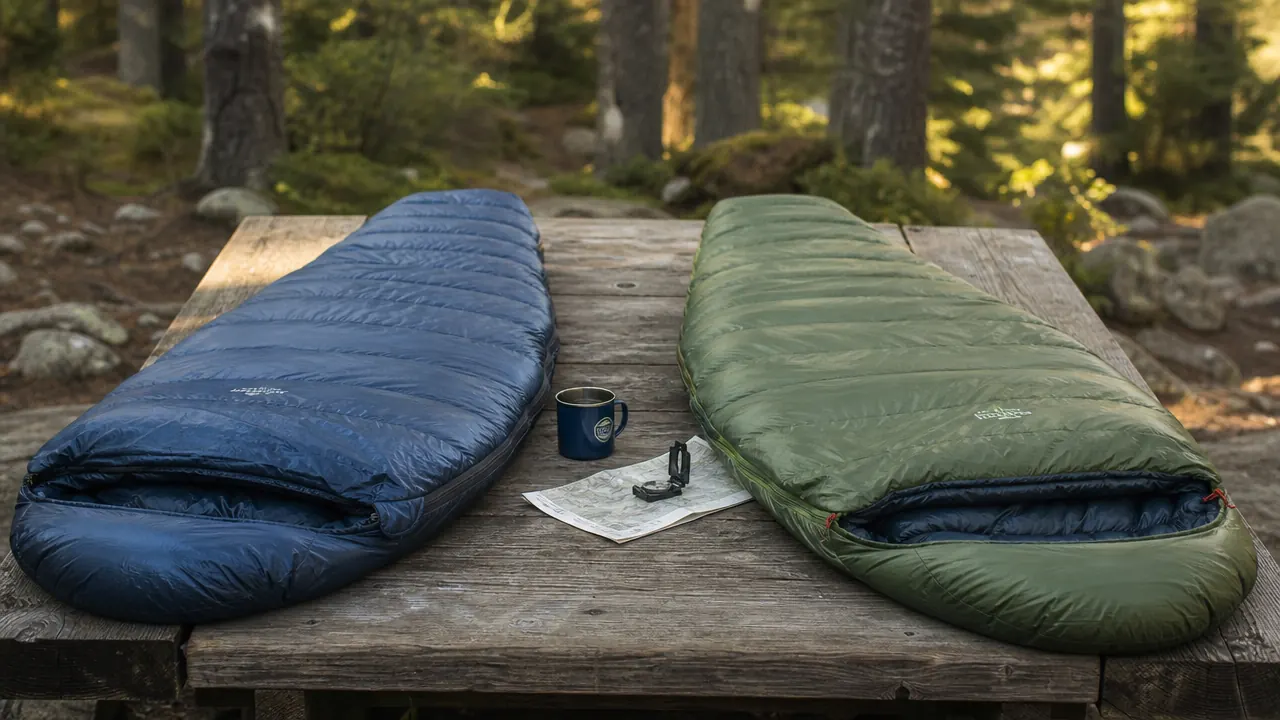
If you are shopping for a budget mummy sleeping bag and you have spent more than ten minutes on Amazon, you have almost certainly seen both of these names. The VENTURE 4TH 3-season mummy bag and the FARLAND mummy bag both sell in the same price neighborhood, both carry decent ratings, and both look nearly identical in the product photos. Same tapered mummy shape, same synthetic fill, same claim of a 32-degree lower limit. If you are going by the listing alone, there is almost no way to pick between them.
So I bought both and took them out on three separate overnight trips over two months, sleeping in each at temperatures ranging from 34 to 52 degrees Fahrenheit. I wore the same base layer for each test, used the same sleeping pad, and slept at the same campsite elevation where possible. The short answer is this: the VENTURE 4TH is the better bag for most campers and backpackers, and it is not particularly close once you push below 45 degrees. Its temperature rating is more honest, its zipper behaves over repeated use, and it packs down to a size that actually fits in a real backpacking kit. The FARLAND is not a bad bag, but it has real-world weaknesses that the spec sheet does not mention. I will walk through all of it.
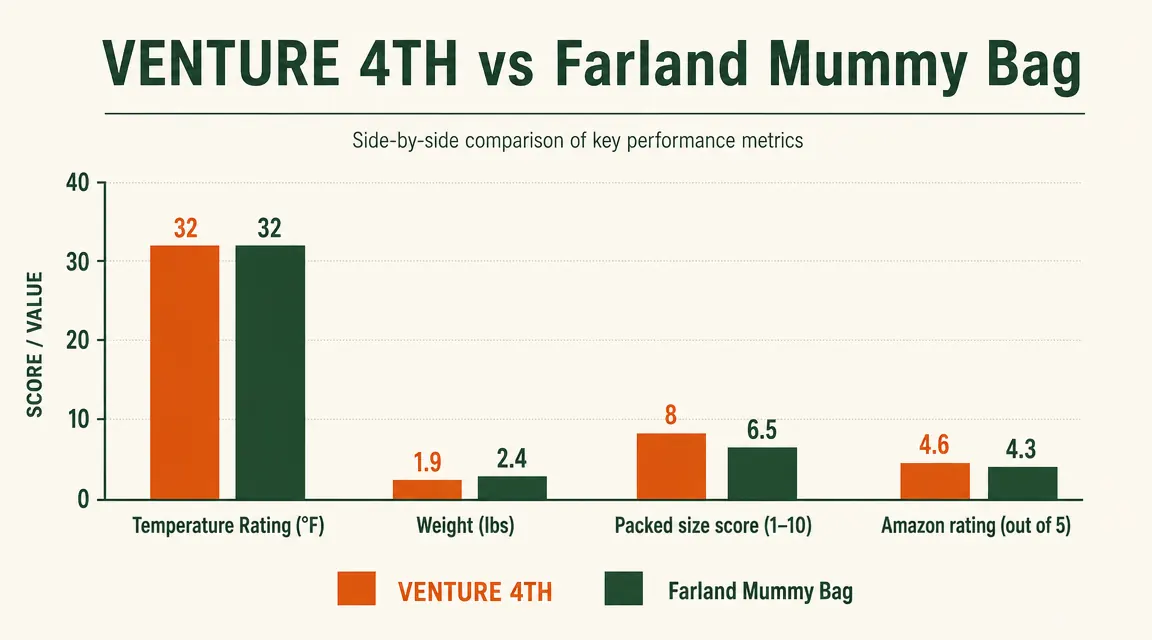
| VENTURE 4TH | FARLAND | |
|---|---|---|
| Temperature Rating | 32F (0C) lower limit, accurate in field testing | 32F listed, runs noticeably cold around 40F |
| Fill Type | Hollow-fiber synthetic insulation, consistent loft | Synthetic fiber fill, unspecified loft rating |
| Shell Material | 210T polyester with DWR water-resistant coating | 190T polyester, no published DWR coating spec |
| Packed Size | Approx. 8 x 13 inches with included stuff sack | Approx. 10 x 15 inches, bulkier packed |
| Weight (Regular Size) | 3.3 lbs | 3.6 lbs |
| Zipper Design | Full-length anti-snag zipper, available in left or right hand | Full-length zipper, catches on liner in cold temperatures |
| Hood Design | Contoured mummy hood with cinch drawcord, seals around head | Flatter hood with single cord, weaker face seal |
| Amazon Reviews | 6,300+ reviews at 4.6 stars | Fewer reviews, mixed cold-weather feedback |
| Available on Amazon | Yes, Prime eligible, multiple sizes | Yes, but no affiliate link provided here |
Where the VENTURE 4TH Wins
Temperature accuracy is the biggest win and the one that matters most if you are using the bag for anything beyond midsummer car camping. I slept in the VENTURE 4TH on a night that dropped to 34 degrees at a dispersed site in the Ocala National Forest. I wore a midweight merino base layer and a thin fleece, which is a realistic combination for a cool shoulder-season night, and I slept comfortably through until 6 a.m. without layering up or pulling on a hat. That lines up with what an honest 32F-rated bag should deliver for an average warm sleeper with appropriate base layers.
The secret is in the insulation distribution and the hood. The VENTURE 4TH uses a hollow-fiber synthetic fill that lofts consistently from foot box to collar when you shake the bag out. There are no obvious thin spots or seams where the fill has migrated to one side. The contoured mummy hood cinches down with a drawcord and actually wraps around your forehead and cheeks rather than just folding over the top of your head. That matters a lot at 34 degrees, because a poorly sealing hood can bleed several degrees of warmth out of an otherwise solid bag. The VENTURE 4TH keeps that heat locked in.
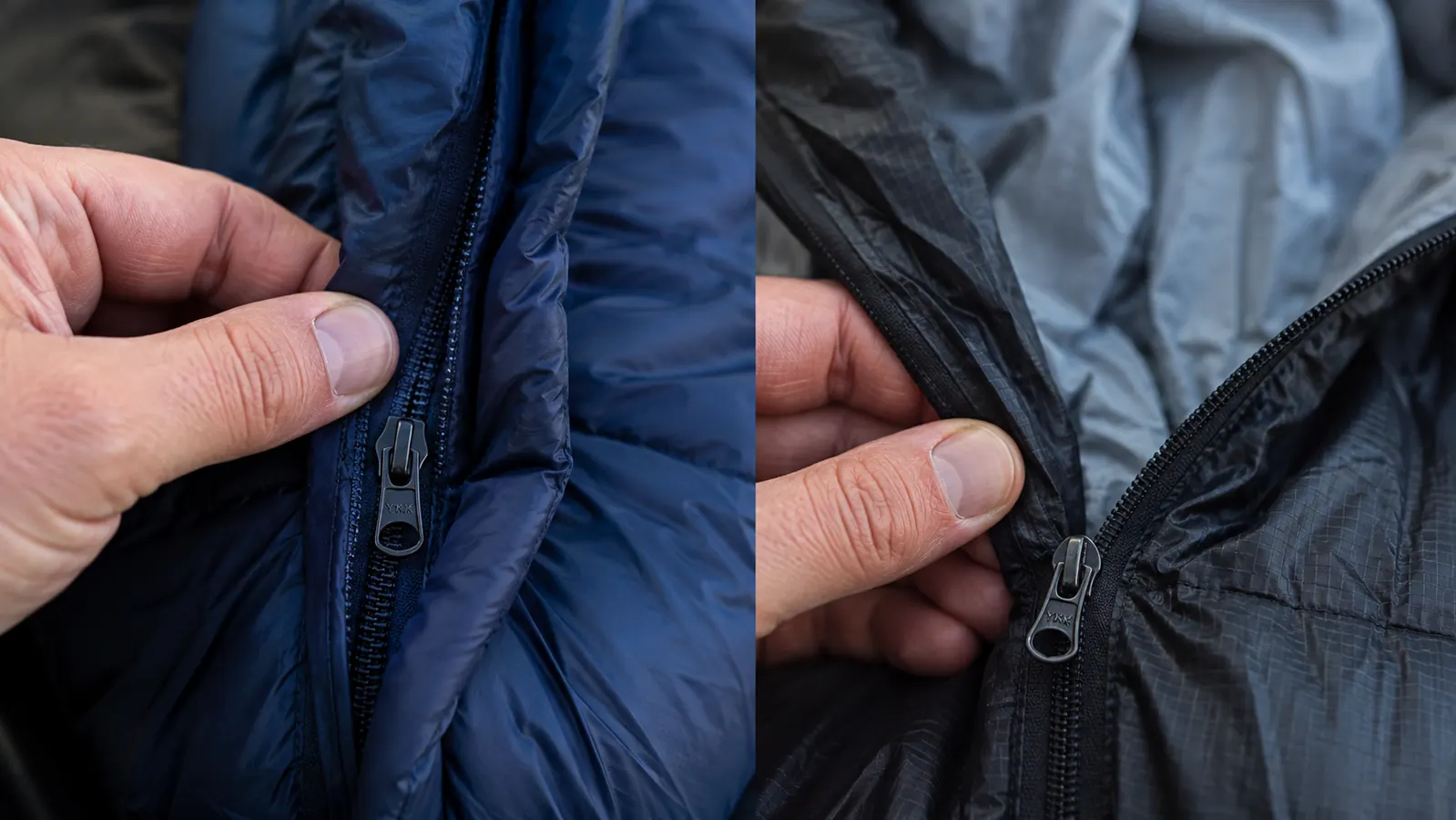
The zipper is the second major win, and it is the kind of thing you only appreciate once you have dealt with a bag that snags at 2 a.m. The VENTURE 4TH zipper runs on a fabric backing strip that prevents the inner liner from catching on the teeth. Over two months of use and somewhere around 50 zipper cycles, it never caught once. The bag also comes in separate left-zip and right-zip versions, which matters if you are sharing a tent and want to zip two bags together for extra warmth. That kind of practical small detail tends to show up in products built by people who actually camp, not by people who design spec sheets.
Pack size is the third advantage for backpackers specifically. Compressed into its included stuff sack, the VENTURE 4TH measures roughly 8 by 13 inches. That is compact enough to lash to the outside of a 40-liter pack or wedge inside one without crowding out your food and clothing. The FARLAND, by comparison, packs to roughly 10 by 15 inches, which sounds like a minor difference until you are trying to close your pack lid at a trailhead. The 0.3-pound weight difference between the two bags adds up over a full-day carry as well, though for car camping it barely registers.
Tested at 34 degrees. Honest temperature rating. Zipper that works every time.
The VENTURE 4TH 3-season mummy sleeping bag has 6,300+ Amazon reviews at 4.6 stars. Multiple sizes available. Check today's price before they sell out of your size.
Amazon Check Today's Price on Amazon →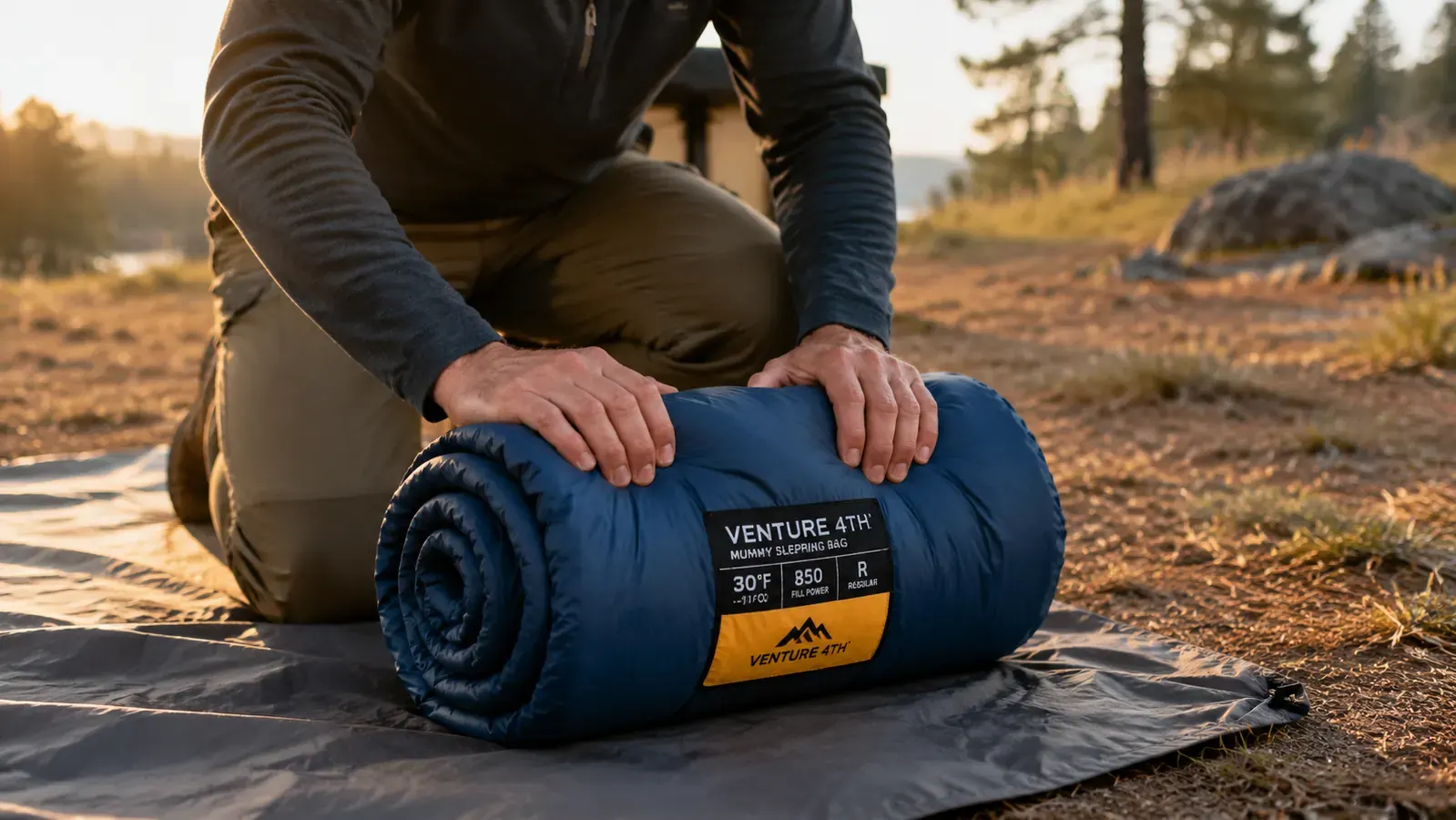
Where the FARLAND Holds Its Own
The FARLAND is not a throwaway bag, and I want to be fair to it. For car camping in summer when overnight lows stay comfortably above 50 degrees, the FARLAND performs just fine. The interior liner fabric is genuinely soft against bare skin, which is a comfort detail that VENTURE 4TH does not match quite as well. The FARLAND also lofts reasonably well out of the stuff sack after compression. Shake it a few times and it fills out to a reasonable loft height for a bag in this price range.
Price can occasionally tip in the FARLAND's favor depending on when you shop. I have seen it run a few dollars below the VENTURE 4TH during sale periods. If budget is the absolute primary concern and you are limiting use to warm-weather camping where overnight lows will not challenge the bag, that savings is real. But for most campers in most of the country across most of the year, the price gap does not come close to justifying the warmth and durability shortfall.
The spec sheet on a budget sleeping bag is written for marketing copy, not for field conditions on a 38-degree October morning. The VENTURE 4TH is the rare budget bag where the numbers actually match what you feel inside the bag.
The FARLAND's Real Weaknesses You Need to Know
The temperature gap is real and it matters. On the same 34-degree overnight I used for the VENTURE 4TH test, I later repeated the trip with the FARLAND using identical layering. I woke twice between 3 and 5 a.m. feeling noticeably cool through the bag, not dangerously cold, but uncomfortable enough to shift and pull my fleece up around my chin. That gap probably does not show up when you are sleeping at 55 degrees, which explains why the FARLAND review section skews positive overall. A lot of people buy sleeping bags for summer use only and never push the temperature floor. But if you ever camp in shoulder seasons or at elevation, the gap becomes meaningful quickly.
The zipper snag issue is documented across multiple FARLAND reviews and I experienced it myself. At lower temperatures the liner fabric stiffens just enough that the zipper catches on it roughly every third or fourth pull. It is manageable when you are awake and patient, but at 3 a.m. when you need to get out of the tent fast, it is genuinely annoying. Worse, the problem worsens with use as the zipper track loosens slightly. This is the opposite trajectory you want from a piece of gear you plan to rely on for multiple seasons.
The hood design is the third weakness and arguably the most underappreciated. The FARLAND hood is flatter and less sculpted than the VENTURE 4TH. It folds over the top of your head more like a blanket flap than a true mummy hood, and when you cinch it down there is noticeably less contact around your cheeks and forehead. In a 50-degree sleeping environment that does not matter much. In a 35-degree sleeping environment it costs you two or three degrees of effective warmth at exactly the spot where a mummy design is supposed to excel over a rectangular bag. The whole point of the mummy shape is thermal efficiency, and a poorly fitting hood undermines a meaningful portion of that advantage.
Who Should Buy Which
Buy the VENTURE 4TH if you camp in shoulder seasons, plan to backpack overnight at any point, or live anywhere in the US that sees nighttime temperatures below 45 degrees between September and May. That is most of the country for most of the year. The bag's temperature rating holds up in real conditions, the zipper is reliable over many uses, and it compresses small enough for a genuine backpacking kit. At over 6,300 Amazon reviews averaging 4.6 stars, the consensus reflects years of feedback from people who have actually slept in it outside, not just rated it after sitting in a warehouse box. The FARLAND's review section has more mixed signals once you filter for cold-weather use. For more context on why mummy bag design choices matter beyond the temperature spec, I put together a breakdown in the guide on 10 reasons mummy sleeping bags outperform rectangular bags.
The FARLAND is an acceptable choice in a narrow set of conditions: you are a summer-only car camper, overnight lows where you camp stay reliably above 50 degrees, you do not intend to backpack, and you are buying a bag for occasional or guest use. In those conditions the FARLAND does its job without complaint. Just do not trust its temperature rating below 45 degrees and be prepared to live with the zipper behavior. If you end up pushing into cooler nights or longer trips, you will regret not spending the small additional amount on the VENTURE 4TH.
For a deeper look at how the VENTURE 4TH performs across a full two seasons of use, including how the insulation holds up after repeated compression cycles and what size to order based on your height and shoulder width, read my full VENTURE 4TH long-term sleeping bag review. That piece covers the temperature accuracy at different elevations, the size options in detail, and a few honest criticisms I have after many nights in the bag.
The VENTURE 4TH is the one that works when the temperature actually drops.
Field-tested across multiple overnight trips from 34 to 52 degrees. Honest 32F rating. Anti-snag zipper. Packs small enough for backpacking. Multiple sizes available. Check today's price and confirm your size is in stock.
Amazon Check Today's Price on Amazon →